PEELS & FACIALS CONSIDERED SKIN MAINTENANCE
Professional chemical peels and clinician-led facials designed to support clearer, smoother, better-conditioned skin — at both Sunnybank and Toowong.

SKIN, LOOKED AFTER PROPERLY
HOW PEELS WORK: CONTROLLED EXFOLIATION, THEN RENEWAL
A chemical peel is a controlled application of acids or enzymes that loosens the outermost layer of skin cells. Your skin then sheds them on a predictable timeline and rebuilds underneath.
The Acid Families
AHAs — glycolic, lactic, mandelic — work at the surface for texture and tone. Salicylic is oil-soluble and clears congested pores. Enzymes digest dead cells in a measured way. TCA is the more controlled, depth-variable option used for specific concerns.

What Happens Afterwards
Your skin goes through a short renewal cycle over the following days — anywhere from mild redness for a few hours to visible flaking for a week, depending on the peel chosen. Strict SPF 50+ for at least four weeks afterwards is part of the protocol.


WHY CHOOSE FLOURISH FOR YOUR PEEL OR FACIAL
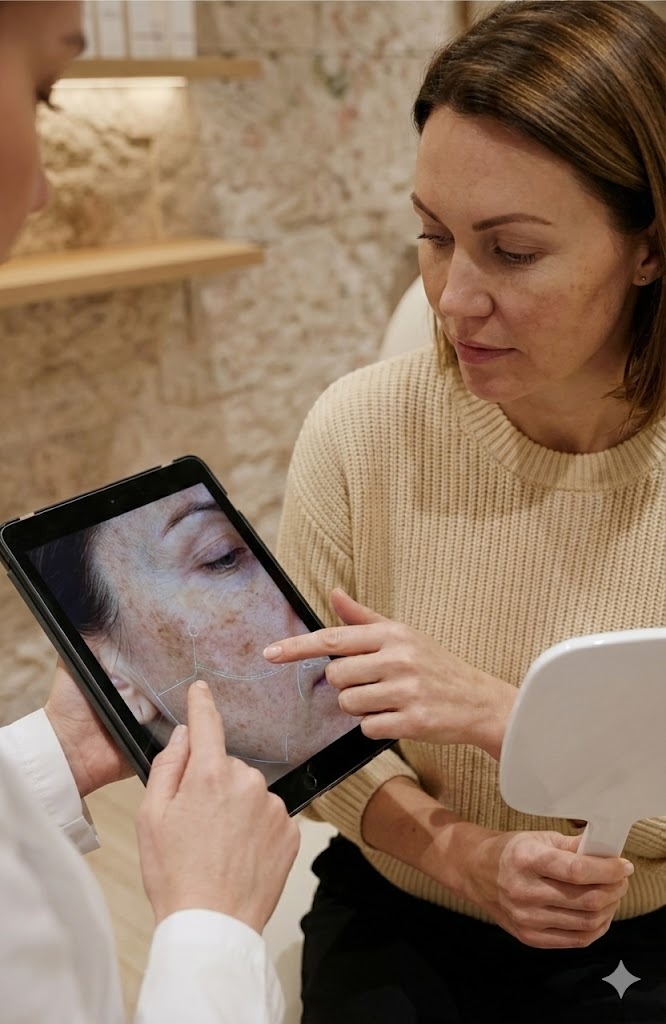
Peels are one of those treatments where the difference between a good result and a problem is the person holding the brush. Skin type, acid choice, depth, layering, neutralisation, aftercare — each of these decisions matters. At Flourish, your peel is performed by a Registered Nurse, not a beauty therapist. That’s a deliberate standard, and it shapes how we consult, how we select your peel, and how we plan a course.
Our peel menu draws on the Ultraceuticals professional range and industry-standard formulations — chosen because they’re well-evidenced and widely used in Australian clinical practice. We’ll tell you honestly if a peel isn’t the right fit for what you’re chasing, and we’ll point you towards something that is. Individual results vary.
WHAT PEELS & FACIALS CAN SUPPORT

Texture & Dullness
Designed to support smoother texture and a clearer, fresher finish by supporting the skin’s natural renewal cycle. Individual results vary.

Congestion & Breakouts
Salicylic and mandelic-based peels help to clear congested pores and settle oil-prone, breakout-prone skin. Individual results vary.

Pigmentation & Tone
Brightening and mandelic peels help to reduce the appearance of uneven tone and post-inflammatory pigmentation over a course. Individual results vary.

Ongoing Maintenance
Signature and Power facials are designed to keep the surface conditioned between peel courses or higher-intensity treatments.
See the Flourish Difference
At Flourish Skin & Laser Studio, we believe seeing is believing. Explore our gallery of real client outcomes, achieved through tailored treatment plans and world-class medical technology. These results are a testament to the clinical expertise of our team and our commitment to revealing your best skin.
FAQ
Which peel is right for me?
It depends on the concern. Congestion and breakouts tend to suit salicylic-based peels such as Jessner, or mandelic. Uneven tone and pigmentation typically respond to lactic, mandelic or the brightening range. Texture and dullness suit the Clarifying Mandelic tiers or Lumi Bright. Sensitive and reactive skin is usually better served by an enzyme peel such as A-zyme. Atrophic acne scars — ice-pick and narrow boxcar — may be suitable for TCA CROSS as a focal technique. Your consultation maps concern to peel.
What's the difference between a peel and a facial?
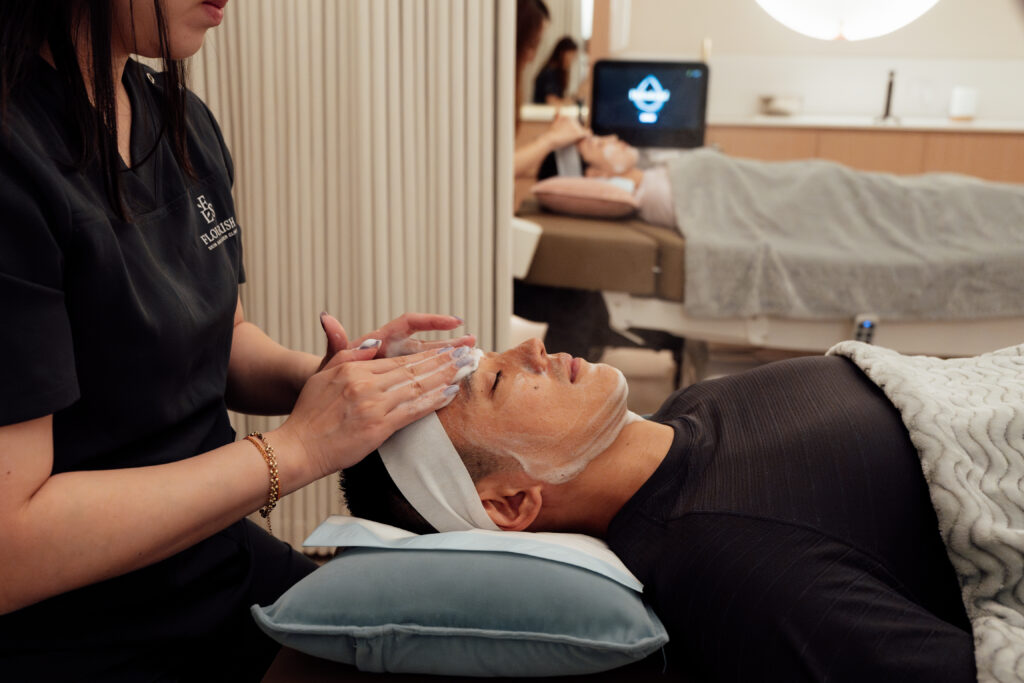
A peel is a controlled application of acids or enzymes designed to produce a predictable renewal cycle — that’s where the mild flaking and visible turnover come from. A facial is a multi-step conditioning treatment (cleanse, exfoliate, mask, serum, SPF) with minimal downtime. Our Signature and Power facials sit in the facial category; everything else on the menu is a peel.
Does it hurt? What does downtime actually look like?
Superficial peels typically produce a short tingle or warmth on application. Stronger options such as Jessner can briefly sting more. Downtime ranges from a few hours of mild redness (enzyme peels and facials) to visible light flaking between days two and five for the superficial range. TCA CROSS is done point-by-point — each treated scar scabs for five to ten days; the skin around it is left alone. SPF 50+ is non-negotiable for at least four weeks afterwards.
How many sessions will I need?
A course of four to six superficial peels, spaced two to four weeks apart, is the usual starting point. TCA CROSS is typically three to six sessions spaced four to eight weeks apart, with results maturing over the following three to six months. Facials are usually monthly maintenance. The right cadence for your skin is decided at consultation.
Can I have a peel if I'm pregnant or breastfeeding?
Most peels are not recommended during pregnancy or breastfeeding — this includes Jessner, salicylic-based peels, TCA and TCA CROSS. Enzyme peels such as A-zyme are generally the most likely to pass clinical assessment, but the decision is always made case-by-case at consultation. We’d rather recommend a pause than proceed where the evidence is thin.
Can I have a peel while on Roaccutane (isotretinoin)?
Not during a course, and we apply a conservative six-month washout after finishing Roaccutane for any medium-depth peel or TCA CROSS. Superficial peels may be considered sooner with a proper clinical assessment. Please mention any current or recent Roaccutane use at booking.
What's included in the price?
The treatment itself — prep, peel, neutralisation where required, and the recommended post-peel protection on the day. Your consultation is free and separate from the treatment fee. A course of peels is priced per session; we don’t lock you into a pre-paid package before you’ve seen how your skin responds.
Who performs the peel?
Every peel at Flourish is performed by our Registered Nurses. We’ve chosen to deliver peels at a clinical standard rather than a salon one — that shapes how your skin is assessed, how the peel is selected, and how a course is planned.
Do peels work on darker skin (Fitzpatrick IV–VI)?
Yes, with careful acid selection. Mandelic, lactic and enzyme peels are generally well-tolerated on medium-to-deeper skin tones. Stronger options and TCA require more conservative protocols because the risk of post-inflammatory pigmentation is higher. Your consultation includes a Fitzpatrick assessment as standard.
READY WHEN YOU ARE
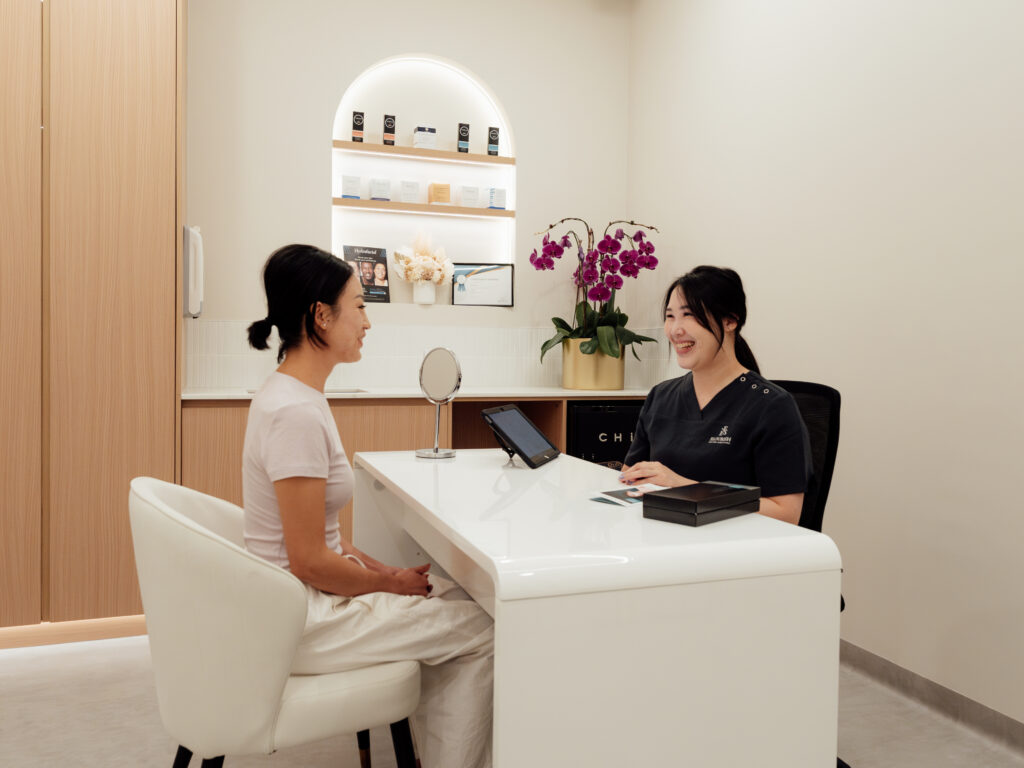
Book an appointment at Sunnybank or Toowong — or start with a free consultation if you'd like to map a peel course to your skin first.
Book Your Appointment