Skin Laxity & Sagging
The cheek sits a little lower than it used to. Non-surgical options can support firmness over time, within honest limits, when matched to where your skin actually is.

What We Can Help

Mid-Face & Cheek Flattening
Loss of cheek projection as deeper fat compartments shrink and drift.

Deepening Nasolabial Folds
Softening of the line from cheekbone to jaw as structure shifts.

Early Jowl Softening
Subtle loss of jawline definition from collagen and elastin decline.

The Honest Approach to Non-Surgical Lifting
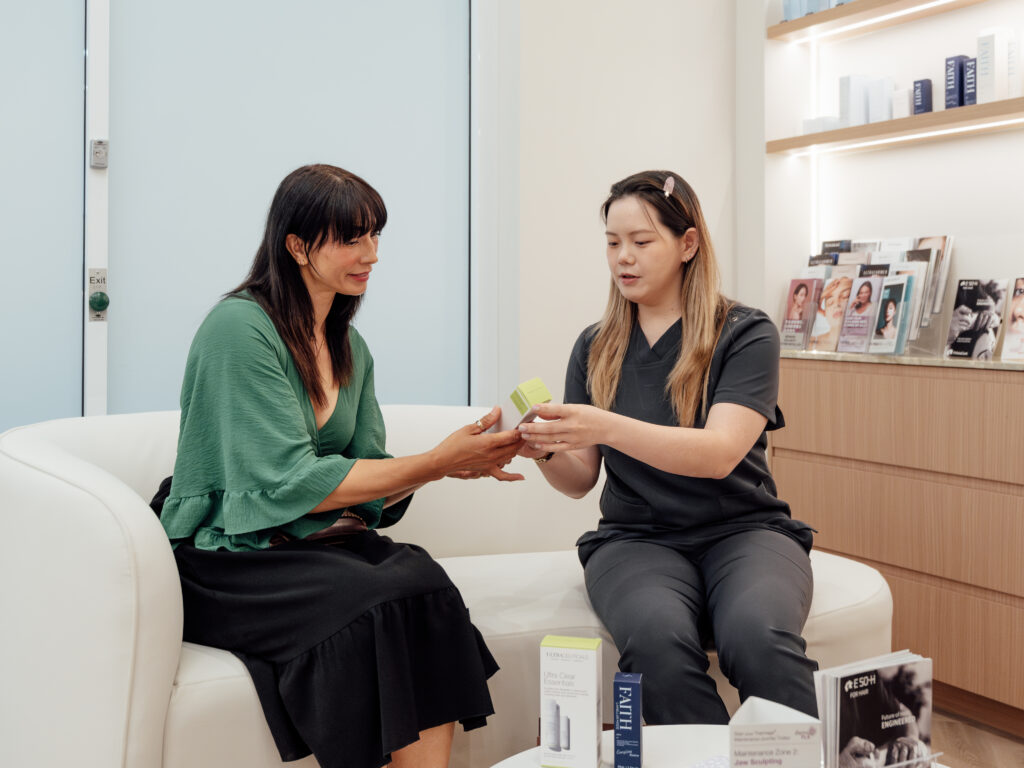
Energy devices and biostimulation are designed to support collagen production and gradual firming over 3 to 6 months. They are not a facelift, and we will not describe them as one. At Flourish Skin & Laser Clinic, our Registered Nurses match the right modality to your skin, your goals and your decade, and tell you upfront if a surgical conversation is the better fit.
Why Our Skin Laxity Results Are Different
Honest Limits, Stated
If your presentation sits outside what non-surgical work can address, we say so and recommend a surgical consultation rather than book a plan that won't meet expectations.
Combination Protocols
No single device addresses everything. Plans typically pair an annual deeper treatment with gentler maintenance and skin-quality work between visits.
Realistic Timelines
Collagen remodelling takes 3 to 6 months, with peak response around three months. We sequence treatments accordingly, not for a quick-feeling result.
FAQ
Why does facial skin lose firmness as we age?
Facial laxity is rarely one thing. Collagen reduces by roughly 1% a year from the mid-20s and elastin doesn’t regenerate well once damaged. Deeper fat compartments shrink while superficial ones drift downward, and the upper jaw and orbital rim gradually lose volume. Photoaging from chronic UV exposure (a real factor in Brisbane’s subtropical climate) is the single largest modifiable driver. Lifestyle factors like smoking, poor sleep and weight fluctuation accelerate the process.
Can I fix this with skincare alone?
Skincare supports barrier function, photoprotection and texture, and daily SPF is the most important habit for slowing laxity. Topical products cannot reach the dermal layers where structural change happens, so skincare and in-clinic treatments are designed to complement each other.
What's the difference between HIFU, Thermage and bipolar RF for the cheeks?
HIFU uses focused ultrasound to reach the SMAS and deep dermis at precise depths. Thermage FLX uses monopolar RF for bulk dermal heating in a single session. Bipolar RF uses gentler, shallower heating across a short course of sessions. They’re different tools for different goals and skin types, and your location also drives which option is available.
Are any of these treatments equivalent to a facelift?
No. We do not describe them that way. They are designed to support skin tightening and collagen production, and they are not a substitute for a surgical facelift. They do not produce facelift-level outcomes.
How long before I see a visible difference?
Collagen remodelling takes 3 to 6 months. Skin often feels different (smoother, firmer) before it looks different. Your clinician will review progress at follow-up appointments. Individual results vary.
How long do the results last?
Depending on modality, results typically last 12 to 24 months. HIFU sits around 12 to 18 months, monopolar RF around 12 to 24 months, bipolar RF tends to be softer with more frequent maintenance. Laxity is a moving biological target, so treatment is planned as ongoing maintenance rather than a one-off event.
How do I know whether I'm a candidate for non-surgical treatment or whether I should see a surgeon?
That’s what your consultation is for. If your presentation sits outside what non-surgical treatment can realistically address (pronounced jowl descent, heavy skin redundancy or expectations at a surgical level), we’ll say so and recommend a surgical conversation rather than book a plan that won’t meet your expectations.
Is there a "right" age to start treatment?
No. What matters is matching the treatment to where your skin actually is. Late 20s to 30s is the collagen-loss phase, where early gentle stimulation earns its keep. The 40s tend to be when non-invasive energy devices deliver their best cost-to-benefit. In the 50s and beyond, mild-to-moderate laxity still responds well to energy devices, while moderate-to-severe laxity may sit outside what non-surgical treatment can address.
Who isn't a candidate for these treatments?
Pregnancy and breastfeeding (insufficient safety data for HIFU, RF and threads), pacemakers and other implanted electronic devices, metal implants in the treatment area, active infection or herpes simplex, keloid or hypertrophic scarring tendency, active isotretinoin use, and significant bleeding disorders or current anticoagulants. Suitability is always assessed in consultation.
Why do you recommend combination protocols rather than one device?
No single device addresses every aspect of laxity. A realistic plan sequences an annual deeper treatment (HIFU or Thermage FLX) with gentler maintenance sessions (bipolar RF) and skin-quality work between visits. Maintenance is the plan, not an add-on, because laxity is a moving biological target.
Ready to Talk Through the Options?
Every plan starts with a free consultation at Sunnybank or Toowong. Your Registered Nurse will assess your skin, explain what's realistic, and walk you through the options. No pressure to proceed.
Book Your Free Consultation