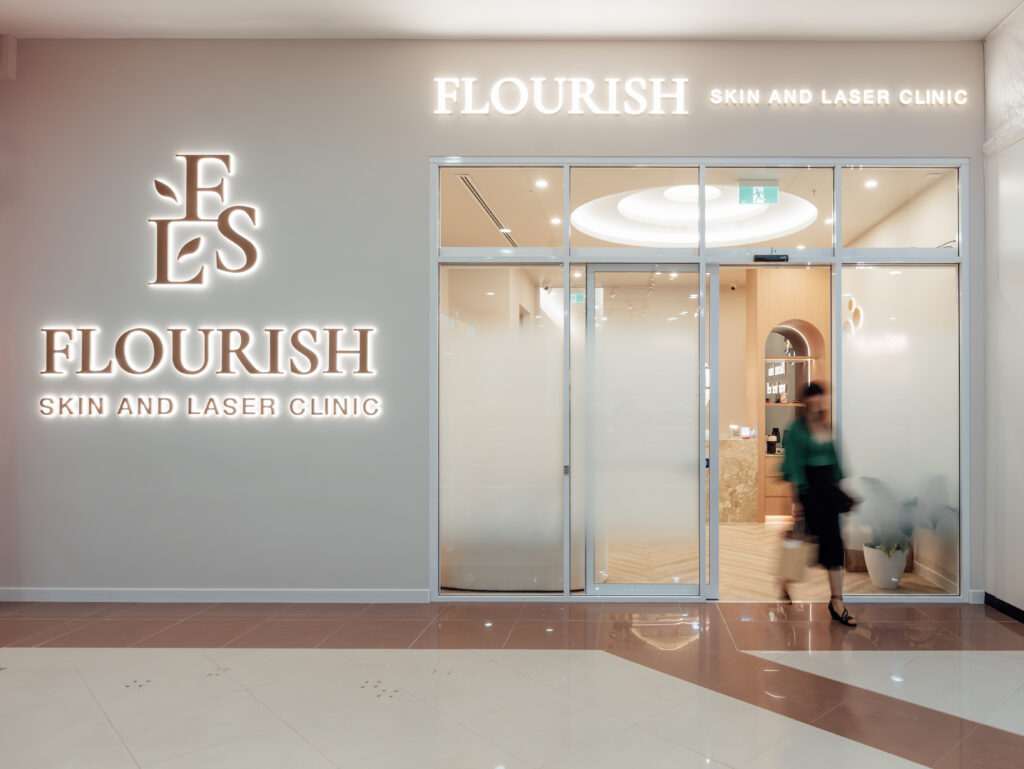
Pico Laser Pigmentation, Toning & Tattoo Removal
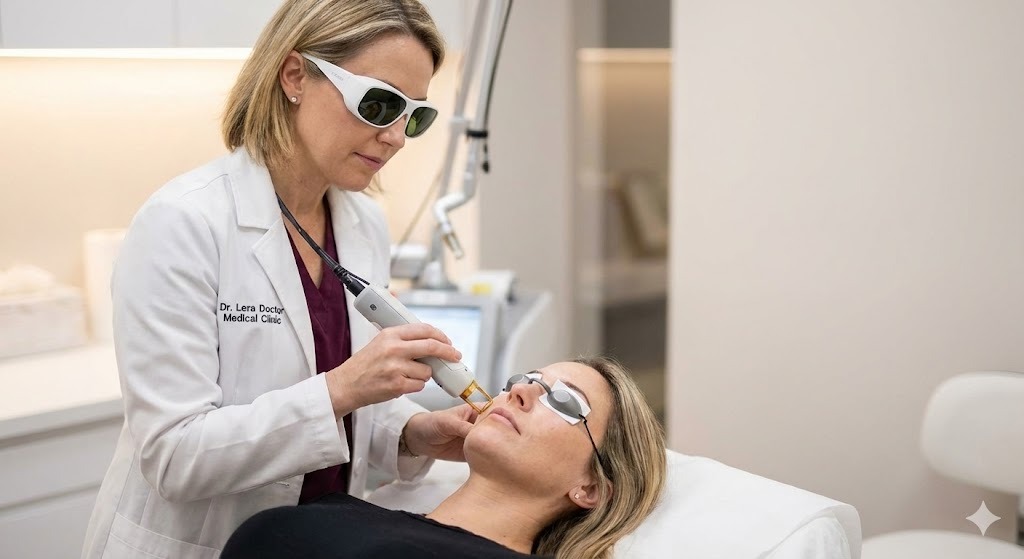
One picosecond laser platform — designed to fragment pigment and tattoo ink — delivered at Sunnybank by Registered Nurses. Individual results vary.

Three Concerns, One Platform
How It Works: Ultra-Short Pulses, Fragmented Pigment
A picosecond pulse lasts a trillionth of a second — far shorter than older Q-switched lasers. That speed means energy is delivered as a rapid pressure wave rather than as heat, designed to shatter pigment particles into fragments small enough for the body to clear.
Photoacoustic, Not Photothermal
Because the pulse finishes before the pigment particle can heat the surrounding tissue, less thermal spread reaches the skin around it. This is the reason picosecond sits more comfortably on a wider range of skin tones.
Wavelengths Matched To Targets
532 nm is preferred for red, orange and yellow tattoo ink and superficial pigment. 1064 nm is preferred for dark ink, deeper pigment, and darker skin tones. Your Registered Nurse selects the setting at assessment.
Why Choose Flourish For Your Pico Treatment
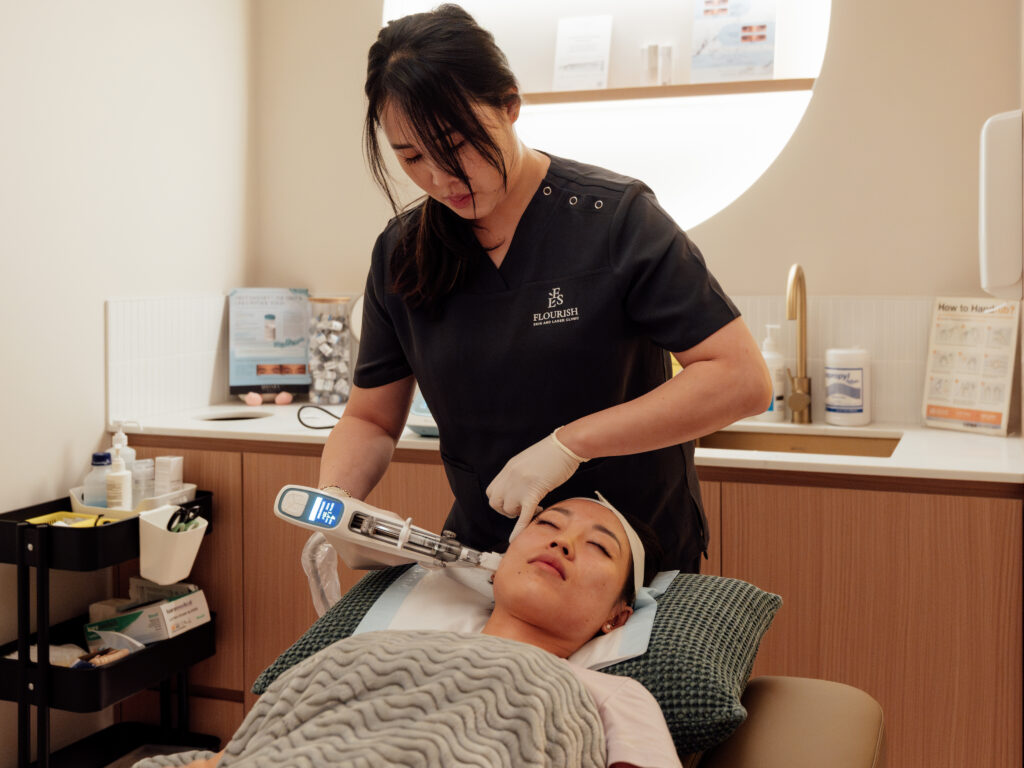
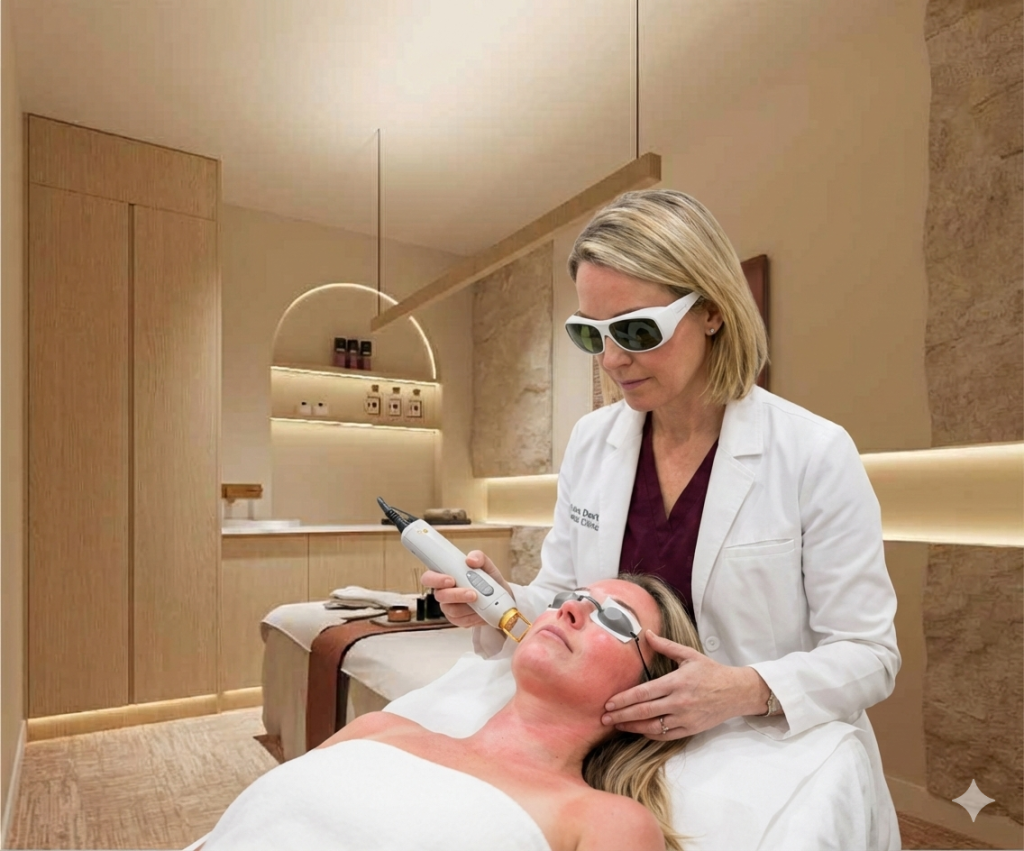
Our picosecond laser platform at Sunnybank is supplied by its Australian sponsor and included on the Australian Register of Therapeutic Goods. It is a TGA-regulated device operated by Registered Nurses licensed under Queensland’s Radiation Safety Act 1999 — the state’s framework for cosmetic Class 4 laser use. Suitability is assessed at consultation before any treatment proceeds.
Pigmentation, toning and tattoo removal share a device — they don’t share a protocol. A discrete sunspot is not a full-face toning pass, and a full-sleeve tattoo is not a cosmetic eyebrow. Settings are tailored to the indication, the area, and your Fitzpatrick skin type. Pricing is published on this page. Individual results vary.
What Most Clients Can Expect

In the Treatment Chair
Pigmentation spots: 15–45 minutes, optional topical numbing for larger areas. Toning full face: 20–40 minutes. Tattoo: 5–30 minutes depending on size, with 30–45 minutes of numbing cream beforehand if requested.

Immediately After
Toning produces mild erythema for 2–12 hours. Pigmentation spots darken and form a coffee-ground crust for 5–10 days before shedding. Tattoos frost white for 20–30 minutes, then swell and crust over 7–14 days.

Between Sessions
Daily SPF 50+ on treated areas, no hot showers or sauna for 48 hours, no picking of scabs on tattoo or pigmentation sites. Most clients return to normal activities the same day or next day.
See the Flourish Difference
At Flourish Skin & Laser Studio, we believe seeing is believing. Explore our gallery of real client outcomes, achieved through tailored treatment plans and world-class medical technology. These results are a testament to the clinical expertise of our team and our commitment to revealing your best skin.
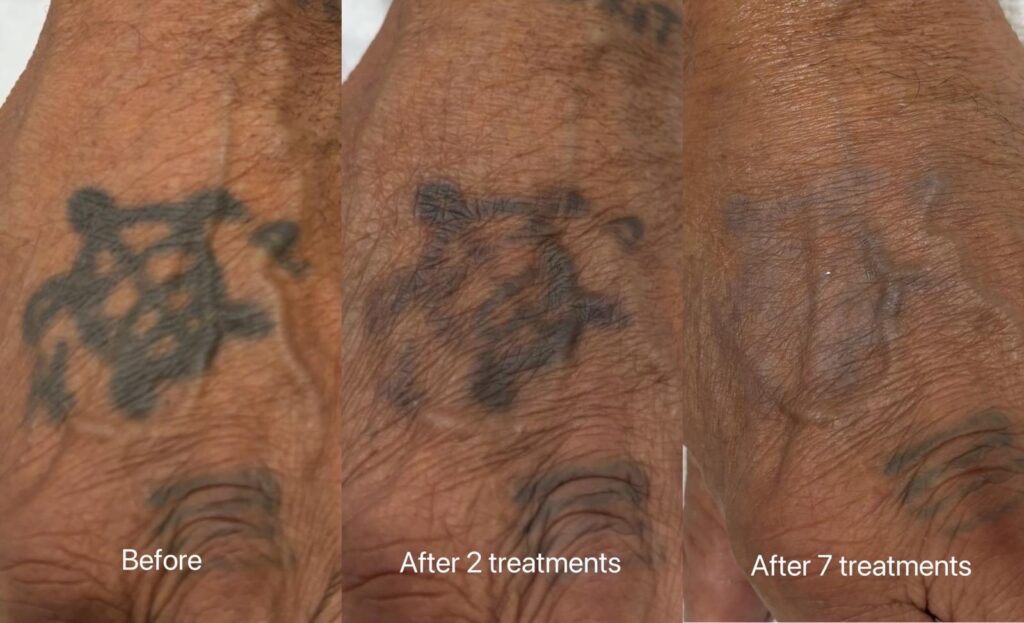
Tattoo Removal Case Study
Client at Flourish Skin & Laser Clinic sought to fade a long-standing black tattoo. Creams failed; goal was gradual lightening over multiple sessions
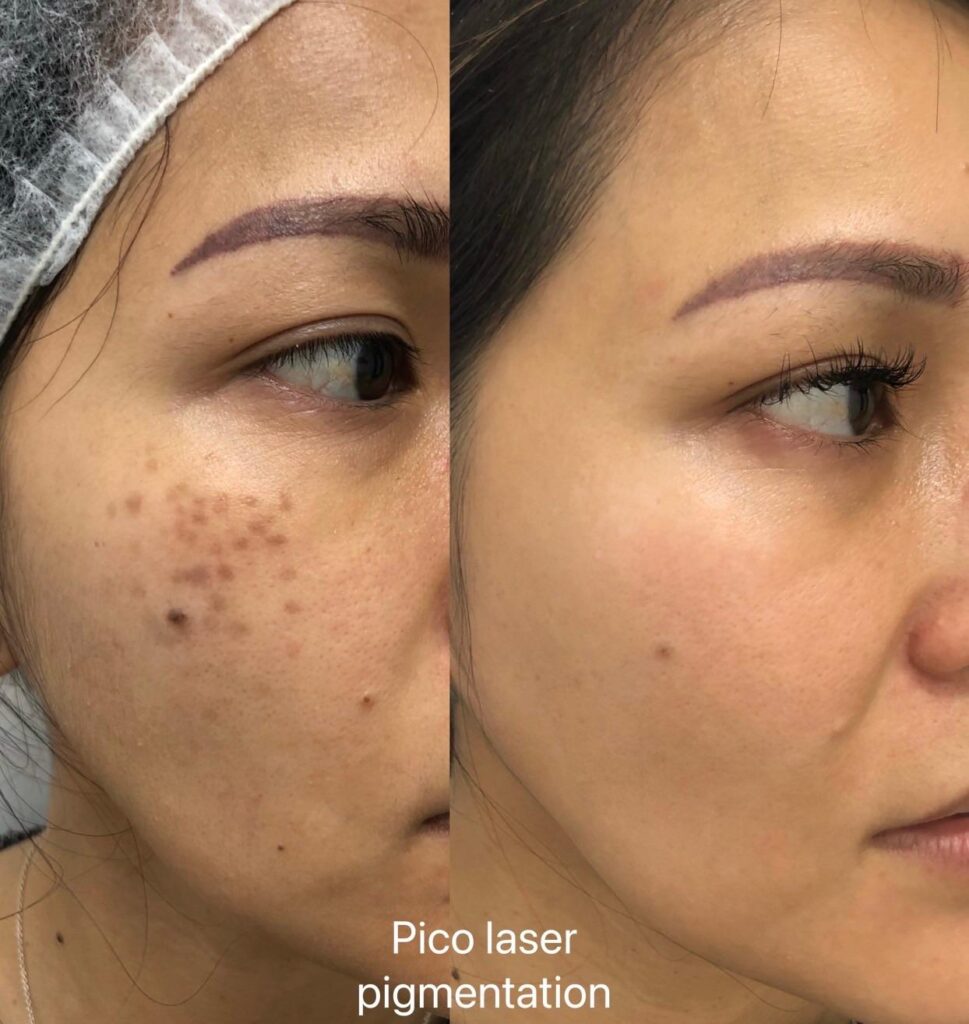
Pico Pigmentation Case Study
Client at Flourish (Sunnybank) had sun spots unresponsive to topicals and peels. Pico laser was chosen to target pigment; risks including PIH were discussed.
FAQ
How is Pico different from older Q-switched lasers?
Older Q-switched lasers work in nanoseconds and rely on heat to break down pigment. Picosecond lasers pulse in trillionths of a second, using a photoacoustic shockwave instead — designed to fragment pigment into much smaller particles with less surrounding heat. That generally means fewer sessions and lower risk of post-inflammatory pigmentation. PIH remains a possibility, especially in darker skin tones, and settings are adjusted in consultation. Temporary redness, crusting and — less commonly — scarring or textural change also remain possible risks of any laser treatment. Individual results vary.
How many sessions will I need?
Pigmentation spots: typically 1–3 sessions for superficial, 3–5 for deeper, spaced 4–6 weeks apart. Full-face toning: 4–6 sessions spaced 2–4 weeks apart. Tattoo removal: typically 5–10 sessions spaced 6–8 weeks apart; dense multi-colour work may require up to 15 sessions. Your Registered Nurse maps a realistic plan at consultation. Individual results vary.
Can Pico treat melasma?
Melasma is a chronic, relapsing condition driven by hormones, UV and heat — not a pigment spot to be treated aggressively. Conservative low-fluence 1064 nm toning may help support melasma management as part of a broader plan that includes daily SPF 50+ and a topical regimen. It is not curative, and relapse is expected. Individual results vary.
Does it hurt?
Pigmentation work feels like a quick rubber-band flick per spot. Toning feels warm and prickly across the face. Tattoo removal is the most intense of the three — often described as hot flicks of oil — and numbing cream is available as a $50 add-on. Sensation varies by area and skin type.
Can Pico Be Used On Darker Skin Tones?
1064 nm is the preferred wavelength for Fitzpatrick IV–VI skin because most of its energy bypasses epidermal melanin. 532 nm and 755 nm are used with more caution, and a test patch is standard before a full session. Your Registered Nurse assesses skin type and settings at consultation. Individual results vary.
What about cosmetic tattoos — eyebrows, eyeliner, lip?
Cosmetic tattoo pigments can contain iron and titanium oxides that may darken paradoxically on the first pulse. A mandatory patch test is performed before any full treatment. Where results are predictable, a typical course is 2–6 sessions. Some residual shadowing may remain. Individual results vary.
When should I not book?
Defer if you are pregnant or breastfeeding, taking isotretinoin (6–12-month washout), have an active tan or recent sun exposure, have an active skin infection in the treatment area, are on photosensitising medication, or have a history of keloid scarring. Don’t stop prescribed medications without speaking to your prescriber. Suitability is confirmed at your free consultation — that’s exactly what it’s for.
Who performs the treatment?
Every Pico session at Sunnybank is performed by a Registered Nurse licensed under Queensland’s Radiation Safety Act 1999. The clinic holds the relevant Possession Licence; operators hold Use Licences endorsed for pigmentation and tattoo removal. Patient assessment and consent are led by an RN.


Considering Pico For Pigmentation, Toning Or Tattoo Removal?
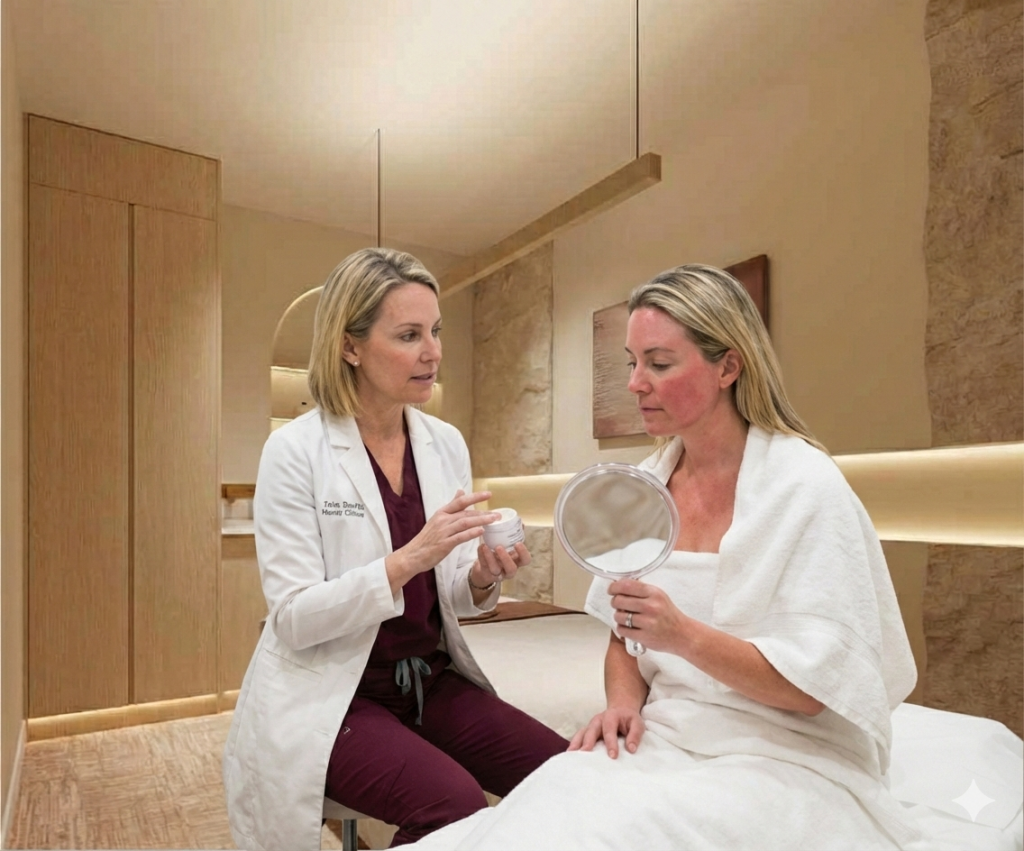
Book a free consultation at Sunnybank. Your Registered Nurse will assess your skin, talk through realistic outcomes, and map a plan that fits your goals.
Book Your Consultation